.png)
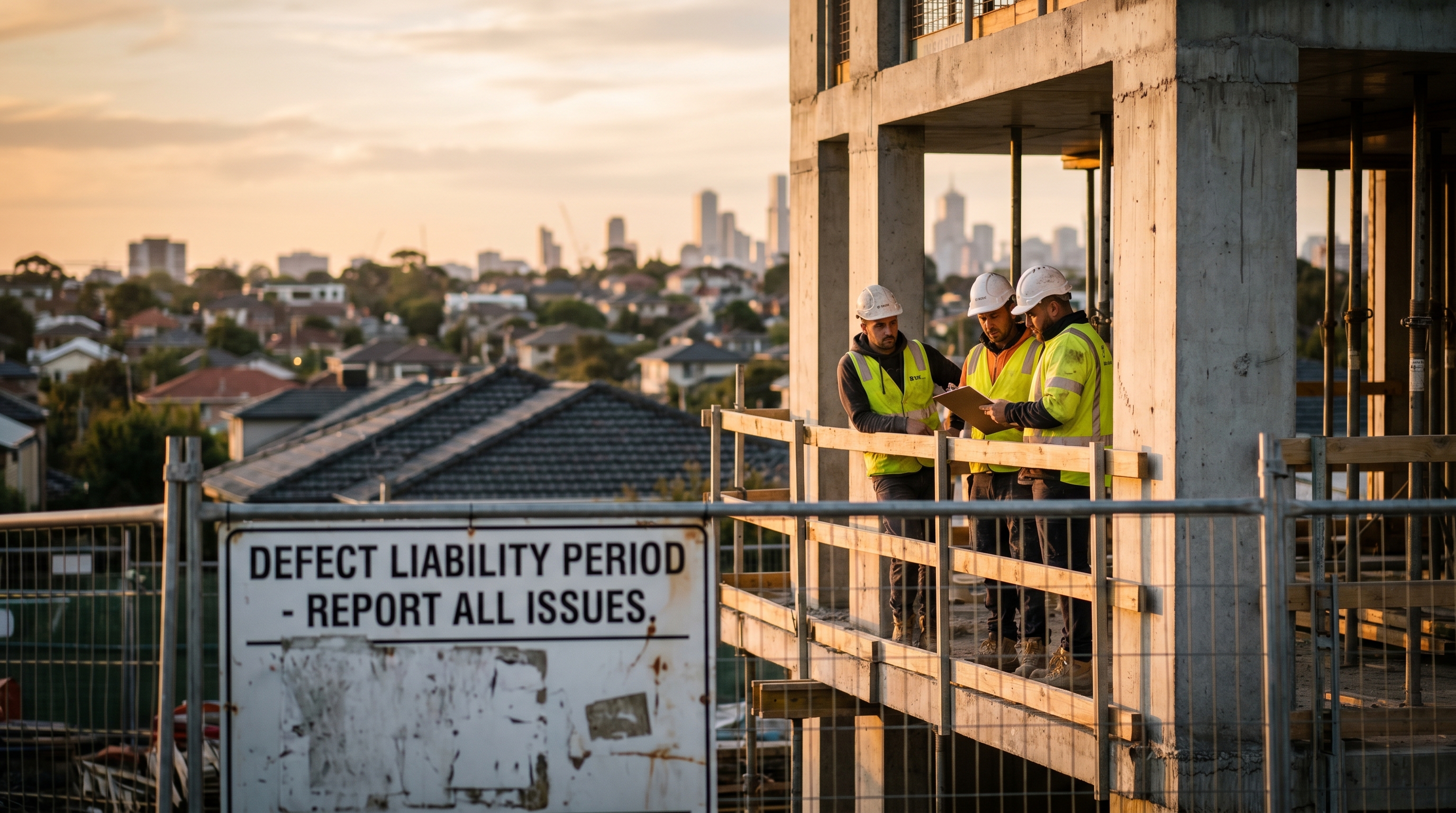
Construction Contract Risks Hidden in Defect Liability Periods
A Baulkham Hills family signed a $520,000 HIA contract for a single-storey addition. Everything seemed straightforward until defects started appearing months after handover. What they discovered next cost them thousands more and nine months of NCAT proceedings. The real kicker? It all could have been avoided with proper contract review before signing.
This scenario plays out across Australian construction sites every day. Projects get delivered, keys get handed over, and everyone celebrates. But lurking in those contract clauses are construction contract risks that can bite you months or even years later. Today we’re diving deep into defect liability periods and how they can either protect your business or expose you to massive financial headaches.
What Exactly Is a Defect Liability Period
The Defect Liability Period (DLP) is essentially your safety net after project completion. It’s a contractual period, typically running 12 to 24 months after final handover, where the contractor remains legally obligated to fix any construction-related defects that surface.
Think of it as an extended warranty on your building work. But here’s where things get tricky. Unlike your washing machine warranty that clearly lists what’s covered and what’s not, construction DLPs can be murky territory filled with scope gaps and interpretation issues.
Look, the construction industry is valued at over $360 billion in Australia, representing approximately 9% of our GDP. With that much money changing hands, you’d expect crystal-clear contract terms. The reality is quite different.
The Hidden Construction Contract Pitfalls

Here’s what most people don’t realise about defect liability periods. They’re not just about obvious problems like cracked walls or leaking roofs. The real construction contract risks lie in what’s NOT clearly defined.
Scope Gaps That Cost You
Every week, our team reviews contracts where the DLP clauses are so vague they’re practically useless. “Contractor will rectify defects” sounds great until you need to prove what constitutes a defect versus normal wear and tear. Was that paint fade after 18 months a defect or expected deterioration?
The most dangerous construction contract pitfalls we see include:
Undefined defect categories. When contracts don’t specify whether cosmetic issues, performance failures, or design flaws fall under the DLP, you’re setting yourself up for disputes.
Notification timeframes. Some contracts require defect notification within unreasonably short periods. Miss the window by a day and you’re liable for repairs that should be the contractor’s responsibility.
Access and disruption clauses. Who pays when rectifying a defect requires shutting down your business for a week? If it’s not in the contract, good luck getting compensation.
The Provisional Sum Trap
Remember that Baulkham Hills family? Their builder’s provisional sum schedule listed “$22,000 for siteworks and footings (estimate).” Reactive shale during excavation triggered a $91,500 variation notice. They paid $44,000 before realising they’d been caught in one of construction’s oldest traps.
Provisional sums without proper justification are legitimate contractual instruments that have become the single most litigated line item in NSW domestic building contract disputes. When these intersect with defect liability periods, the risks multiply exponentially.
Contract Review as Your First Line of Defence
Here’s the thing about construction risk management. Abraham Lincoln once said, “Give me six hours to chop down a tree and I will spend the first four sharpening the axe.” The same principle applies to construction contracts. The work you do upfront reviewing and negotiating terms will save you exponentially more time and money later.
We’ve seen too many projects where clients focus entirely on getting the best price while ignoring the contract terms that will govern their relationship for months or years. Professional contract review construction services don’t just read the fine print. We identify the gaps, inconsistencies, and potential disputes before they become expensive problems.
Why Melbourne Based Expertise Matters
When construction contract risks surface during the DLP, you need support that understands Australian contract law and Victorian building regulations. We’re not just familiar with the standards on paper. Our team attends site meetings, responds to RFIs in real time, and handles clarifications because we’re in your timezone and your city.
This local expertise becomes crucial when defect disputes arise. Understanding how local councils interpret building codes, knowing which issues VCAT typically sides with contractors on versus clients, and having relationships with local experts who can provide rapid assessments makes the difference between quick resolution and drawn-out disputes.
Our Approach to Risk Identification
Every contract our team reviews includes a comprehensive analysis of defect liability clauses specifically. We don’t just hand you marked-up documents and disappear. We flag scope gaps construction issues, highlight ambiguous terms, and provide clear recommendations for protecting your interests.
The reality is that most construction contract risks can be mitigated with proper planning and clear documentation. When we review your contracts before signing, we’re looking for the landmines that could explode months later during the DLP.
Beyond Contract Review

Proper contract administration throughout your project creates the documentation trail you’ll need if defect issues arise. Progress photos, variation approvals, material specifications, and compliance certificates all become critical evidence when determining whether something is a defect requiring rectification or an issue outside the contractor’s responsibility.
Our team doesn’t just support you during the construction phase. We maintain involvement through handover and into the DLP, helping you navigate defect notifications, assess contractor responses, and coordinate rectification works when required.
Protecting Your Investment
The best time to address construction contract risks was during contract negotiation. The second best time is now, before your next project starts.
Whether you’re a developer managing multiple units, a homeowner planning a renovation, or an owners corporation coordinating common property works, the principles remain the same. Clear contracts, proper administration, and expert support during critical phases protect your interests and your investment.
I’m Sandra Seo, and our Melbourne-based team has been helping Australian construction clients navigate these exact challenges for years. We understand that every project is different, but the fundamentals of risk identification and contract protection remain consistent.
Don’t let defect liability periods become a source of stress and unexpected costs. Get your contracts reviewed by experts who understand both the technical and legal aspects of Australian construction.
Book a consultation with our team today. We’ll review your contracts, identify potential risks, and give you the peace of mind that comes from knowing your interests are properly protected.