.png)
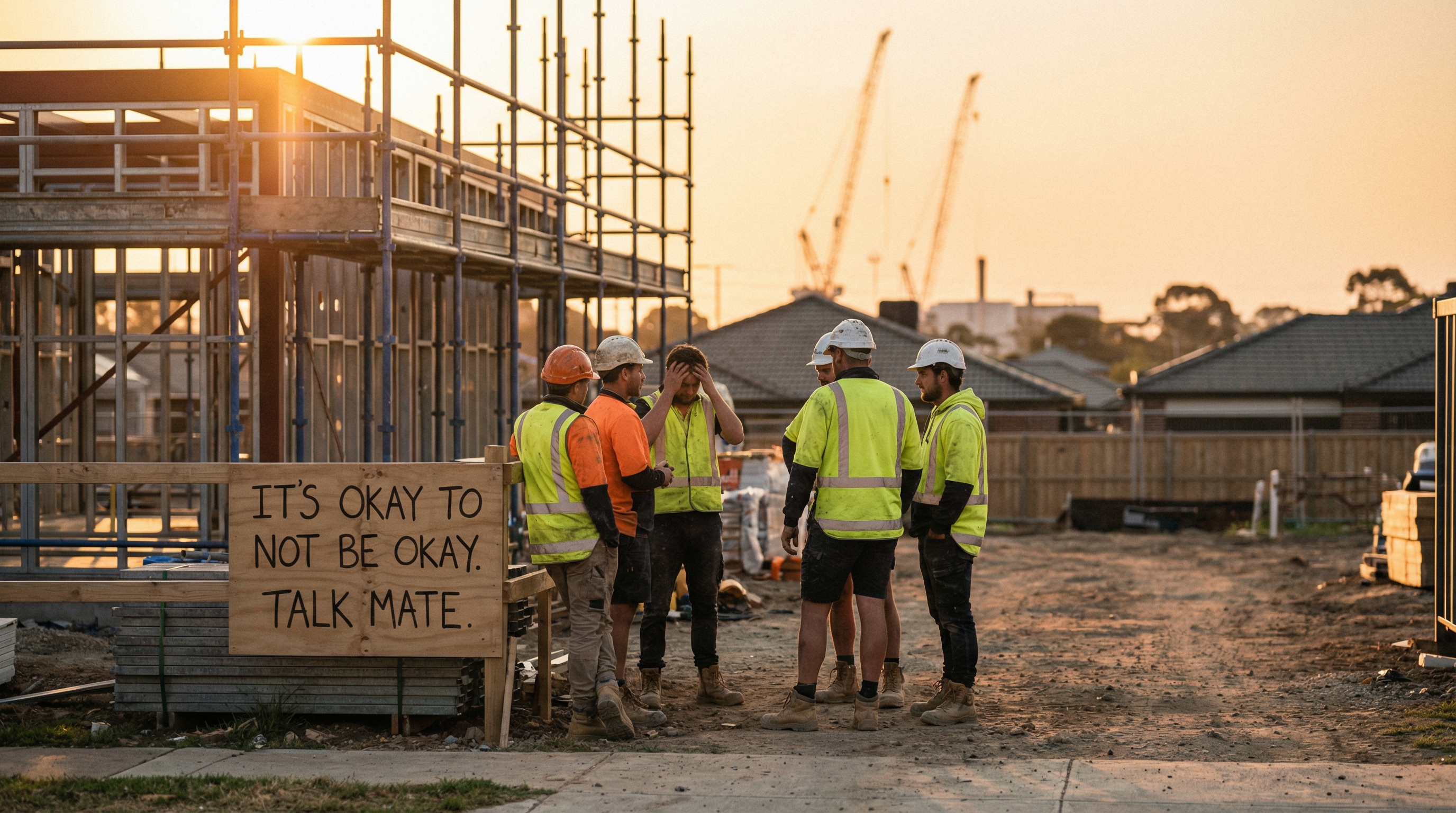
Construction Industry Trends Australia Mental Health Focus
Construction workers are nine times more likely to die from suicide than from a workplace accident. That statistic from MATES in Construction should stop every project manager, builder, and developer in their tracks. We’re talking about an industry that employs over one million Australians, valued at more than $360 billion and representing approximately 9% of our GDP. Yet we’re losing skilled workers to mental health crises at an alarming rate.
Look, I’ve been working in construction consulting for years, and I’ve seen firsthand how poorly managed projects don’t just blow budgets or miss deadlines. They break people. The stress, the uncertainty, the constant firefighting when projects go sideways. It takes a real toll.
Why Construction Mental Health Matters Now
The reality is that construction industry trends Australia show we’re facing a perfect storm. Skills shortages, rising material costs, and increasingly complex projects are putting unprecedented pressure on our workforce. When you add poor project management and inadequate risk planning into the mix, you’ve got a recipe for workplace stress that can push good people over the edge.
Recent research published in Current Psychology highlights that construction workers face heightened risk of mental ill-health, with workplace psychosocial risk factors playing a significant role. The study emphasises the need for better understanding of these risks to inform prevention efforts across the industry.
Here’s what I see happening on sites across Melbourne and beyond. Projects start with unrealistic timelines because someone didn’t properly scope the work. Variations pile up because nobody caught the discrepancies in the documentation upfront. Subcontractors are chasing payments while trying to manage cashflow. Site supervisors are fielding angry calls from clients who weren’t prepared for delays.
Sound familiar? It shouldn’t have to be this way.
The Hidden Cost of Poor Project Management
Winston Churchill once said, “We shape our buildings; thereafter they shape us.” The same principle applies to how we manage construction projects. Poor planning and reactive management don’t just impact budgets, they shape workplace culture and worker wellbeing.
Consider the ripple effects when a project goes off the rails. Subcontractors working unpaid overtime to catch up on delays. Site managers dealing with constant variations because the scope wasn’t properly defined upfront. Trade workers feeling the pressure when they’re asked to deliver impossible timelines with insufficient resources.
The Australian construction outlook shows that 70% of projects are delivered late, with inadequate planning and scope management being primary causes. That’s not just a statistic, that’s 70% of projects creating unnecessary stress for everyone involved.
How Proper Risk Management Protects Mental Wellbeing
This is where having the right project management and estimating processes makes all the difference. When we review contractual documentation thoroughly and identify scope gaps before they become problems, we’re not just protecting budgets. We’re protecting people.
Our team has seen this play out countless times. A well-scoped project with clear documentation and proper risk assessment runs smoother from day one. There are fewer surprises, fewer emergency meetings, fewer sleepless nights for project managers wondering how they’re going to break bad news to clients.
Proactive Documentation Review
Every estimate we prepare includes a comprehensive review of contractual documentation specifically to flag potential issues. We look for scope gaps, specification discrepancies, and unclear responsibilities that could cause problems down the track. This upfront investment in thorough planning pays dividends in reduced project stress.
Real-Time Support During Critical Phases
Being Melbourne-based means our team can respond to RFIs and clarifications in real time, in the same timezone as your projects. When urgent issues arise, there’s no waiting for responses or dealing with delays that compound stress levels. Quick resolution of queries keeps projects moving and reduces the pressure on site teams.
Supporting Industry Mental Health Through Better Processes
The MDPI research on psychosocial health risks shows that holistic intervention programs can make a real difference in project-based workforces. While this research focuses on remote construction sites, the principles apply to all projects. Better planning, clearer communication, and proactive risk management create healthier work environments.
Our capacity to scale with your business also supports better mental health outcomes. During busy periods when you might have multiple tenders landing simultaneously, you don’t need to stretch your internal team to breaking point. We can ramp up to handle the workload, then scale back when things quieten down. This flexibility prevents the burnout that comes from consistently operating above capacity.
Building Industry Trends 2026 and Mental Health
Looking ahead, building industry trends 2026 point towards even greater complexity in construction projects. Sustainability requirements, new technologies, and changing client expectations mean projects will demand more sophisticated management approaches. Getting the fundamentals right, proper estimating, thorough tendering, and proactive project management, becomes even more critical.
The construction sector forecast shows continued growth, which is positive for the industry but also means we need to ensure we have the systems and processes to deliver projects without burning out our workforce. This isn’t just about individual wellbeing, it’s about industry sustainability.
Practical Steps for Better Mental Health Outcomes
Here are some concrete ways proper project management supports mental wellbeing:
Clear Scope Definition: When everyone knows exactly what’s included and what isn’t, there are fewer arguments and less stress during delivery.
Proactive Risk Assessment: Identifying potential issues early means you can plan for them rather than react in crisis mode.
Proper Resource Planning: Realistic timelines and adequate resources reduce the pressure on site teams to achieve impossible outcomes.
Strong Communication Processes: Regular updates and clear escalation procedures prevent small issues from becoming major problems.
Financial Transparency: Proper progress claims and variation management ensure everyone gets paid on time, reducing financial stress.
The Connection Between Quality Processes and Wellbeing
When I reflect on the construction market Australia trends, one thing stands out. The companies that consistently deliver successful projects without burning out their teams are the ones with robust processes. They invest in proper estimating, they take time to review documentation thoroughly, and they have systems for managing risks proactively.
These aren’t just nice-to-have processes, they’re essential for creating sustainable businesses and healthy workplaces. The alternative is the reactive, firefighting approach that characterises too many construction projects and contributes to the mental health challenges we see across the industry.
Moving Forward Together
The mental health crisis in construction won’t be solved by any single intervention, but better project management is definitely part of the solution. When we reduce unnecessary stress through proper planning and proactive risk management, we create space for people to do their best work without compromising their wellbeing.
As someone who’s spent years working with builders, subcontractors, and developers across Melbourne, I’ve seen the difference that quality project management services can make. Not just to project outcomes, but to the experience of everyone involved in delivering them.
If you’re looking to reduce project stress while improving outcomes, our team is here to help. We understand that good project management isn’t just about budgets and timelines, it’s about creating conditions where people can thrive.
For more insights on supporting your construction projects with proper planning and risk management, connect with me on LinkedIn. Let’s work together to build not just better projects, but a healthier industry.
Get in touch to discuss how our Melbourne-based team can support your next project with comprehensive estimating, tendering, and project management services that prioritise both outcomes and wellbeing.