
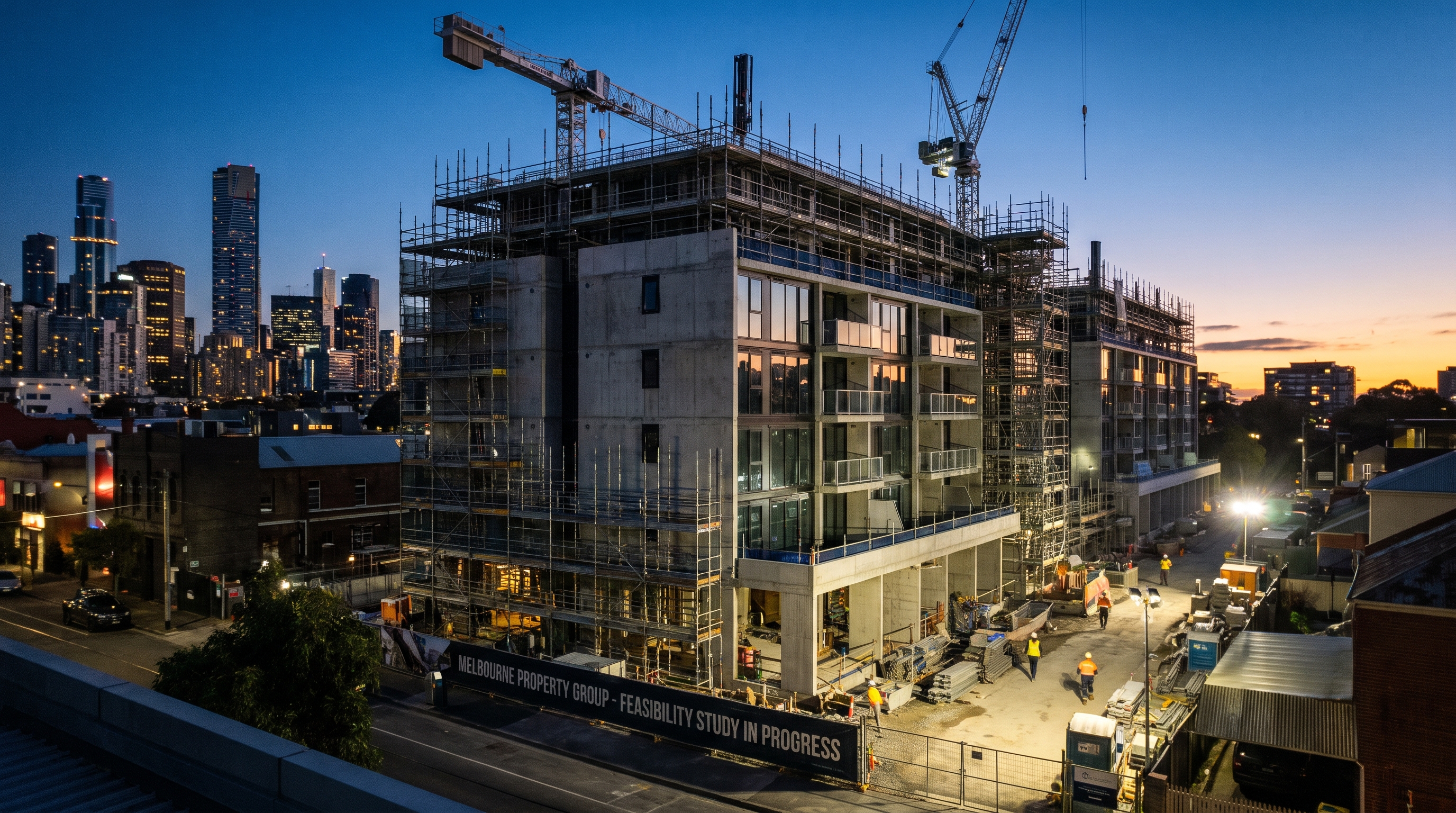
If you’re working through the property development process Australia has in front of developers right now, there’s one document that decides whether you make money or lose your shirt. It’s the development feasibility. And here’s the uncomfortable truth. Most feasibilities that fail don’t fail because the developer picked the wrong suburb. They fail because the construction estimate was wrong and the risks were underestimated from day one.
I’m Sandra Seo, Founder and Director of Sami Strategy Co., and our team in Melbourne sees this constantly. A developer brings us a feasibility that looked brilliant on a spreadsheet. Then we price the actual drawings, read the actual documents, and the profit evaporates. So let’s walk through how a feasibility really works, step by step, and where it usually goes wrong.
Why Feasibilities Are Harder Than Ever
The margin for error has shrunk. Developer Steve Chandler, in his piece on why Australia’s housing crisis is structural, not cyclical, points out that construction costs have risen by more than 120 per cent since 2004 and are still climbing, with Rider Levett Bucknall forecasting 4 per cent growth in Sydney alone for 2026. He also notes that over 2,800 construction firms entered insolvency in the 2023/24 financial year. His view is that development has become unfeasible for small to medium developers in most locations, with premium product for owner occupiers in strong suburbs being the main segment that still stacks up.
That’s a sobering read. But it doesn’t mean you shouldn’t develop. It means your numbers need to be right.
The Australian construction industry is valued at over $360 billion, roughly 9% of GDP (ABS 2025). Yet industry figures suggest around 85% of construction projects experience cost overruns, with the average overrun sitting at 28% above initial estimates. Think about what a 28% blowout on your build cost does to a project that was only ever forecasting a modest margin. It doesn’t trim your profit. It wipes it out.
How the Property Development Process Australia Wide Really Works
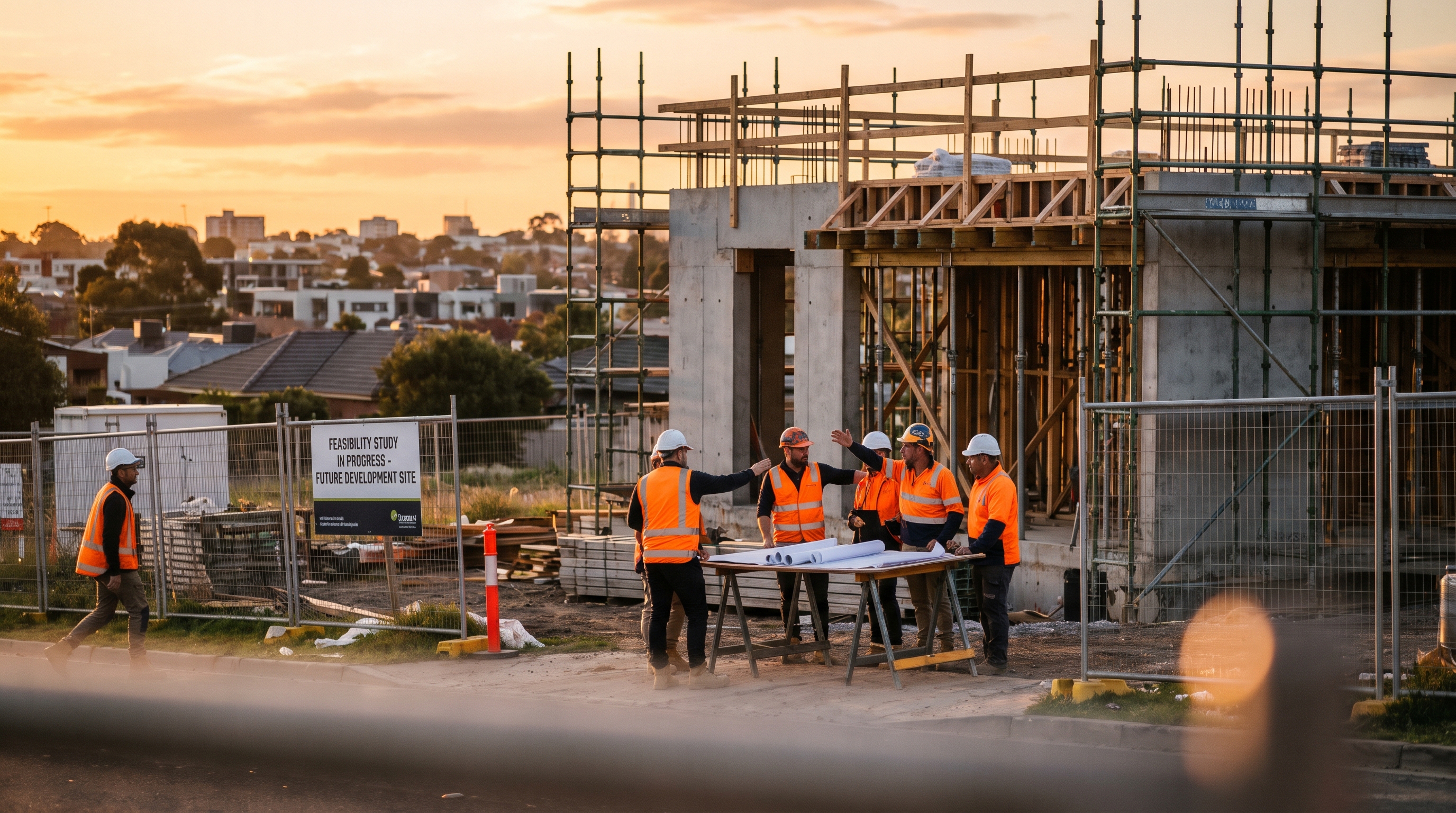
If you’re learning how to develop property in Australia, the feasibility is where strategy meets reality. Here are the key property development steps inside any decent feasibility.
Land Cost and Acquisition
This is more than the purchase price. You’ve got stamp duty, legal fees, due diligence and holding costs from settlement until construction starts. Owner Developer’s guide on assessing development potential before buying describes a familiar trap. A buyer assumes five townhouses will fit, does the sums on five sales, and only discovers after settlement that planning controls, site constraints or stormwater drainage mean four is the realistic number. One lost dwelling can be the difference between a viable project and a dud.
The Construction Cost Estimate
This is the biggest line item and the one most often guessed. Too many feasibilities use a rate per square metre pulled from a past job or a builder’s quick number over the phone. That’s fine for a first look. It’s dangerous for a decision.
A proper construction estimate prices the actual design, including site works, retaining, services connections, demolition, external works and the preliminaries that every builder will include. Professional estimating services typically improve cost accuracy by 15 to 25% compared to internal estimates from smaller firms. On a multimillion dollar build, that range is your entire profit.
Consultant Fees and Statutory Costs
Architects, town planners, engineers, building surveyors, quantity surveyors, plus council fees, development contributions and authority charges. These add up quickly and they’re often underestimated in early feasibilities because nobody has asked the consultants for actual fee proposals yet.
Finance Costs
The Feasly guide to construction finance for property developers in Australia makes a point every developer should take seriously. Development lending criteria differ significantly from homeowner lending, presale requirements and loan to value ratios shape what you can borrow, and what happens if the programme slips is set by the credit terms. The guarantees behind those facilities generally reach the sponsor personally. So when your build runs late, it’s your interest bill and potentially your personal exposure that grows. Get professional advice from a broker and a property finance lawyer before you sign anything.
Contingency
Here’s the thing. Contingency isn’t a slush fund. It’s your protection against what you don’t yet know. The less resolved your design and documentation, the larger your contingency needs to be. A feasibility with a thin contingency on a barely developed design is a hope, not a plan.
Gross Realisation Value
Your GRV is the total expected sales revenue, less GST where applicable. Base it on genuine comparable sales and agent advice, not optimism. Overstating GRV is the twin sin to understating construction costs.
Profit on Cost and Margin
Finally, you compare total development cost against GRV to arrive at your profit on cost and your margin on revenue. Your lender will have a view on the minimum acceptable return, and so should you. If the project only works when every assumption goes your way, it doesn’t work.
Why Development Feasibility Fails
Look, the land development process is full of moving parts, but the failures we see come back to two things over and over. Inaccurate construction estimates and underestimated risk.
The late real estate investor Sam Zell put it perfectly in Am I Being Too Subtle? “In real estate, you make 10% of your money on strategy and 90% on execution.” A feasibility is strategy. Accurate costing and tight risk management are execution. You need both.
The risk side is just as important as the dollars. Around 70% of Australian construction projects are delivered late, with inadequate planning and scope management being the primary causes. Every month of delay adds holding costs and interest. That’s why scope gaps buried in the documents matter so much.
Bringing Estimating In Early
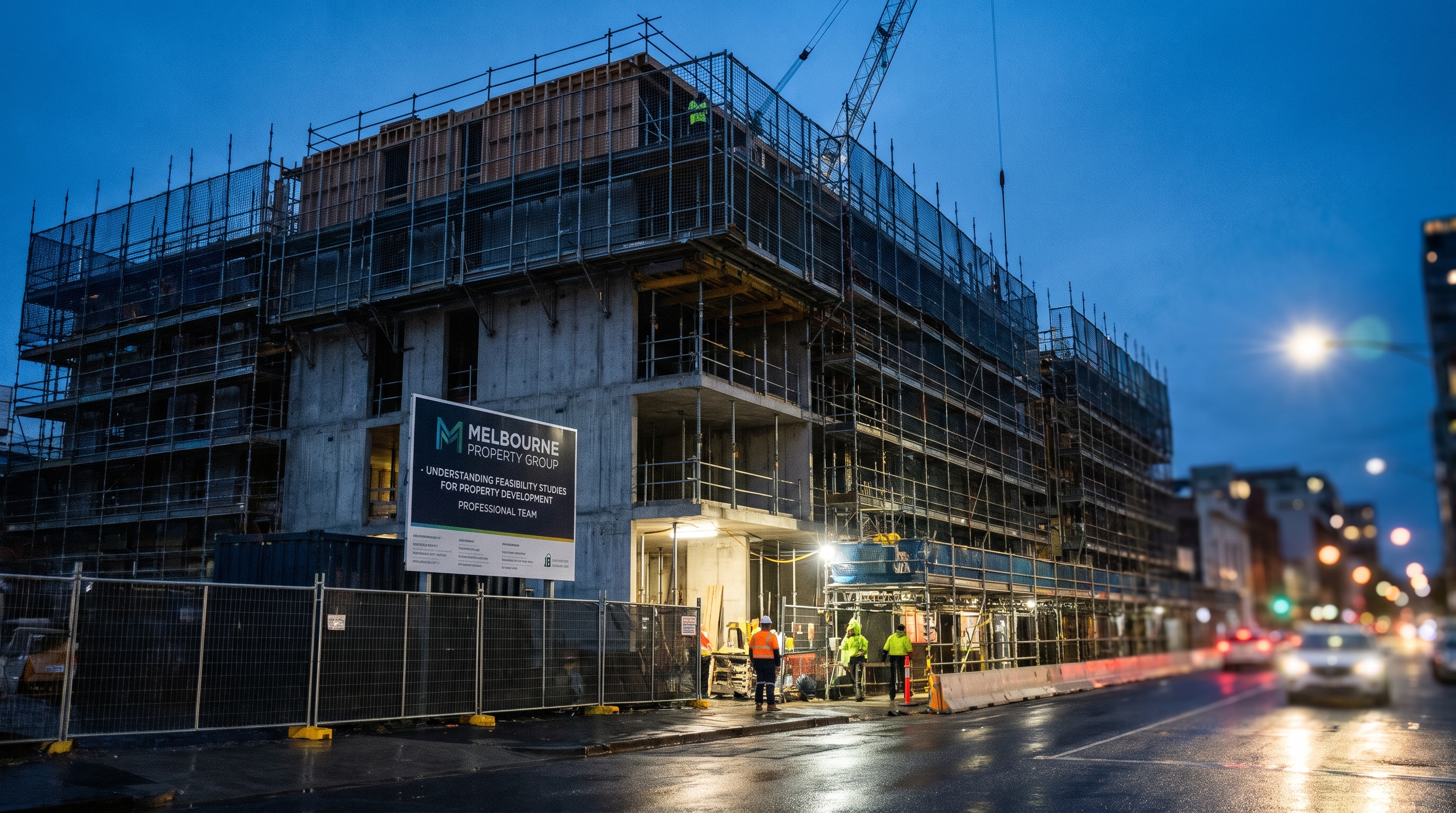
The reality is that the cheapest time to fix a feasibility is before you buy the land or commit to a design. That’s where our team adds the most value.
We review the full documentation, not just the drawings. Every estimate we prepare includes a review of the contractual and design documentation to flag scope gaps, discrepancies and risks. Missing retaining walls, unclear services scope, specification conflicts. We find them on paper so you don’t pay for them on site.
We’re local, and that matters more than people think. We’re based in Melbourne. Our estimators understand Victorian building regulations, local council requirements and Australian contract law. Council contributions, authority requirements and site conditions vary across Melbourne, and a feasibility built on generic national rates will miss them. Because we’re in your city and your timezone, we can attend site meetings and deal with questions as they come up.
We scale with your pipeline. Assessing three sites this month and none next month? Our large team ramps up when you need it and scales back when you don’t, so you’re never paying for idle staff just to keep feasibility capacity on hand.
Beyond the feasibility, our development management service carries that same discipline from land purchase through construction and into defects. The numbers you approved at the start are the numbers we protect all the way through. You can see how we work with developers on our developers page.
Getting Your Numbers Right Before You Commit
There’s an old line attributed to Louis Glickman. “The best investment on Earth is earth.” Maybe so, but only if what you build on it makes money. A feasibility is only as good as the construction estimate and risk assessment behind it.
If you’re weighing up a site or reworking a feasibility that doesn’t quite add up, I’d genuinely like to help. You can connect with me, Sandra Seo, on LinkedIn, explore our full range of services, or get in touch with our Melbourne team to book a free consultation. Let’s make sure your next project makes money on paper and on site.